
The battle on creating jobs is virtually lost. If the battle for achieving higher growth too is lost, then its political consequences could become difficult to manage, says A K Bhattacharya.

'Inter-ministerial coordination, information on the proposed PSUs, and due diligence are taking longer than expected to conclude the process.'

Billed as the first exercise of its kind in demystifying the process of drawing up Budget, Andhra Pradesh on Wednesday made public the draft Budget for 2003-04 that earmarks over 40 per cent of total allocations to irrigation and power.
Fiscal deficit in the first four months of 2012-13 stood at 51.5 per cent of the budget estimates -- slightly better compared to 55.4 per cent in the same period a year ago -- according to Controller General of Accounts (CGA) data released on Friday.
Central Board of Direct Taxes officials claim the figure has surpassed indirect taxes for the first time.

If the Centre and states are keen on spending more to meet the COVID-19 challenges in the coming year, they must bear in mind the need to raise more resources through taxes and non-tax revenues, suggests A K Bhattacharya.

Concerned by GDP slowdown and unrealistic tax targets, the economists urged Finance Minister Nirmala Sitharaman to implement long-term structural steps like land and labour reforms. Warning against any off-Budget financing the economists said the government should prepare a statement of intent for its social, rural and welfare sector expenditure.

The government plans to raise resources to finance capital spending beyond the Rs 3.10 lakh crore budgeted for 2017-18 through higher borrowing or divestment receipts.

Budget announcements will come right before five states, with population of around 250 million, go to polls.

Moody's Investors Service on Wednesday raised India's economic growth estimate for 2023 to 5.5 per cent from 4.8 per cent pegged earlier, on the back of a sharp increase in capital expenditure in the Budget and a resilient economic momentum. It however revised downwards India's growth estimate for 2022 to 6.8 per cent from 7 per cent pegged in November last year. In its February update to Global Macro Outlook 2023-24, Moody's raised the baseline 2023 real growth projections "meaningfully" for several G20 economies, including the US, Canada, the Euro area, India, Russia, Mexico, and Turkiye, accounting for a stronger end to 2022.
As part of the plan, government departments may have to surrender the unspent project-linked component of the Rs 70,000-crore (Rs 700-billion) additional gross Budgetary support at the end of the financial year.
The Union Budget for 2009-10 presented by the finance minister is on predictable lines. Surely, the finance minister has done a fine balancing act of giving a thrust to growth while trying to contain fiscal imbalance.

The Budget for 2018-19 has at least five takeaways that are yet to receive adequate attention, says A K Bhattacharya.

The meetings with various ministries will go on till December 12, according to an office notice

The finance ministry on Friday withdrew expenditure curbs on various departments and ministries imposed in June in the wake of the COVID-19 second wave, reflecting improvement in public finances and the urgency to step up growth.

'Most young taxpayers prefer income tax filing to be flexible yet straightforward.'
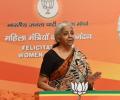
Nirmala Sitharaman is proving to be a better finance minister than her initial rookie status might have led people to expect, observes T N Ninan.

Finance Minister Arun Jaitley presented the Union Budget.

What is required from government is intellectual framework.
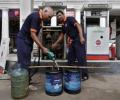
In Budget 2015, the finance minister has opted to take the slow road and has doubled the cess on coal to "balance the need to tax pollution and the price of power" in his words.
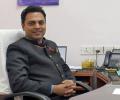
'Given the 50 per cent or thereabouts increase in borrowing that has been announced, it is a reasonable estimate to say that at this time, an increase of 1.7-1.8 per cent on the 3.5 per cent budgeted fiscal deficit target is being anticipated,' Chief Economic Adviser Krishnamurthy Subramanian said on Friday.

A well-established tax system would have a predictable buoyancy - how fast the collections grow as a proportion to the growth of the economy. But that is not the case with GST. It is still undergoing substantial changes as the government responds to structural as well as administrative glitches.

The Budget 2015-16 will include many of the schemes announced by Prime Minister Narendra Modi such as smart cities and high speed trains, Finance Secretary Arvind Mayaram said.

This is the BJP's first full-year Budget.

The government had set a budgetary target of over Rs 1.87 lakh crore for collection from customs duty in current fiscal

Hindustan Unilever's Q3FY24 performance was lacklustre, with both sales and operating profit barely moving from the year-ago period due to price cuts and higher advertising costs. Besides weak demand, the FMCG (fast-moving consumer goods) major is facing increased competitive pressures, particularly from regional players, which, coupled with a slow recovery in rural markets, could put revenues under pressure going forward. Margins are expected to remain range-bound as benefits from falling raw material costs are expected to be neutralised by rising promotional budgets.

'The clubbing of policy announcements in the Budget speech creates policy surprises.' 'Economic actors dislike policy surprises because they throw their plans off track,' points out Alok Tiwari.
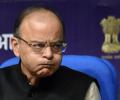
Finance minister attempts a clean-up job, keeps projected expenditure growth low.
Ahead of the new government assuming office later this month, the finance ministry has begun the Budget-making exercise to enable the incoming finance minister to present the full-fledged Budget for 2009-10.

Business success often involves a combination of planning, implementation, and continuous learning, says rediffGURU Harsh Bharwani.
Planning Commission on Friday said there is no case for providing stimulus to the industry to arrest moderating growth as the fiscal deficit is high and may exceed the Budget estimate of 4.6 per cent by about one percentage point.

Actor Poonam Pandey is not being considered as the brand ambassador of the government's national campaign to spread awareness on cervical cancer, Union health ministry officials said on Wednesday.

'Are all roads in India privatised? Are governments not playing a role in airports or ports? If they (private players) want to set up lines for a specific requirement, I see no reason to object. It will expand the opportunity and passengers will also benefit.'
Pencilling in a GDP growth in third and fourth quarters, SBI Research on Wednesday revised its contraction forecast for the current fiscal year to 7 per cent. The agency had earlier forecast a 7.4 per cent contraction in 2020-21 GDP numbers. In April-September, the economy contracted 15.7 per cent but the second half may see a surprise 2.8 per cent growth, if the SBI analysis turns out to be correct.
Unperturbed by the rise in the fiscal deficit, Finance Minister P Chidambaram on Thursday exuded confidence that it would remain within the target of 4.8 per cent of GDP in the current financial year.

The decision to cut development expenditure does not bode well for safety and amenities.

The government has spent a little less than one-third of the Budget estimate of capital expenditure, it can still spend about Rs 20,000 crore this year without disturbing its fiscal deficit target.

Market hopes govt will hike capital expenditure.

Ramoji Rao lived as the interface between business and politics and was an active participant in both for most of his remarkable life.
